
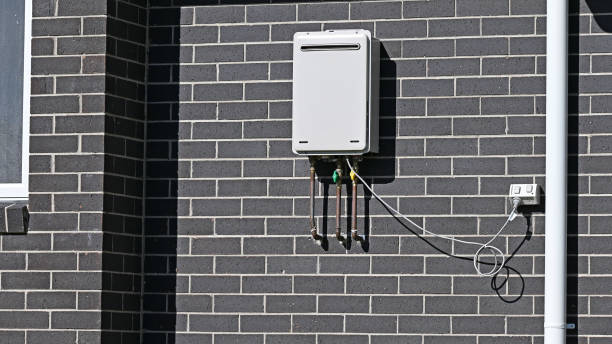

Beyond the Marketing
The water heater replacement decision has become more complicated as tankless water heaters have moved from niche to mainstream. The marketing for tankless units emphasizes endless hot water, energy savings, and space recovery. The marketing for tank units emphasizes simplicity, lower upfront cost, and proven reliability. Both are accurate and both are incomplete.
A genuinely useful comparison accounts for household-specific variables — daily hot water demand, the number of simultaneous uses, the incoming water temperature (which varies dramatically by climate), and the total cost of ownership over the unit’s lifespan.
How Tankless Units Actually Work and Why Simultaneous Use Matters
A tankless water heater heats water on demand as it passes through the unit — there’s no stored reserve. The rate at which it can heat water is expressed as GPM (gallons per minute) at a specified temperature rise. A 7 GPM unit can deliver 7 gallons per minute of hot water, which sounds like a lot — until you calculate what’s being used simultaneously.
A shower uses approximately 2 GPM. A dishwasher uses 1.5–2 GPM. A washing machine uses 1.5–2.5 GPM on a hot cycle. Running two showers simultaneously in a home with a 5 GPM tankless unit leaves no capacity for the dishwasher. In cold climates where incoming water temperature is 40°F (requiring a 70°F temperature rise to reach 110°F output), the same unit’s effective GPM drops below its rated capacity. Sizing a tankless unit to your household’s realistic simultaneous demand — not just your peak individual need — determines whether it delivers on the ‘endless hot water’ promise.
Energy Efficiency: Real Savings vs. Marketing Claims
Tankless units are more energy efficient than tank units in one specific way: they don’t have standby heat loss — the energy required to maintain a tank of water at temperature 24 hours a day whether or not hot water is being used. Standby loss in a tank unit represents approximately 15–20% of the water heating energy budget.
The actual energy savings from going tankless depends on usage patterns: households that use hot water in short bursts across the day (morning shower rush, evening dishwasher, occasional laundry) save more from eliminating standby loss than households that use hot water continuously throughout the day (frequent cooking, laundry, and bathing spread across all hours). The DOE estimates 8–34% energy savings from tankless for typical households, with higher savings for lower-usage households.
Upfront Cost, Lifespan, and Total Cost of Ownership
Tank water heater: $400–$900 for a quality unit, $150–$350 to install (less if the existing connections fit the new unit). Lifespan: 8–12 years. Annual maintenance: descaling if in a hard water area. Total 20-year cost (two units plus installation and maintenance): approximately $1,500–$3,000.
Tankless water heater: $800–$1,500 for a quality gas unit, $500–$2,000 to install (depending on whether gas line or electrical upgrades are needed, and whether the unit is a retrofit). Lifespan: 15–20 years with proper maintenance. Annual maintenance: annual descaling (required in hard water areas — a tank-like mineral accumulation occurs on the heat exchanger that impairs performance). Total 20-year cost (one unit plus installation and maintenance): approximately $2,000–$4,000. The gap is narrower than the upfront cost difference suggests; the economics favor tankless over time primarily in households with lower hot water demand.
The Cold-Climate Consideration That Changes Everything
Tankless water heater performance ratings are specified at a standard incoming water temperature that doesn’t reflect reality in cold climates. A unit rated for 7 GPM at a 77°F temperature rise (incoming 43°F to output 120°F) provides significantly less than 7 GPM when the incoming water drops to 35°F in mid-January, requiring a 85°F temperature rise.
In climates where ground water temperature drops below 50°F in winter, tankless units should be sized with a generous safety margin above calculated demand. The alternative is the experience that gives tankless a bad reputation in cold climates: adequate hot water in summer and a shower that never gets quite hot enough on the coldest winter mornings because the unit is running at its maximum capacity with insufficient headroom for simultaneous uses.